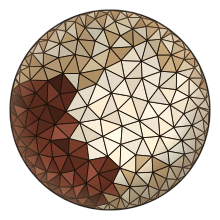
The colour comes from a spectrum.
Forty of Pluto's materials carry a measured absorption spectrum and a Sellmeier dispersion curve, so a tourmaline is dark for the same reason the real crystal is.
Real stones, not guesses
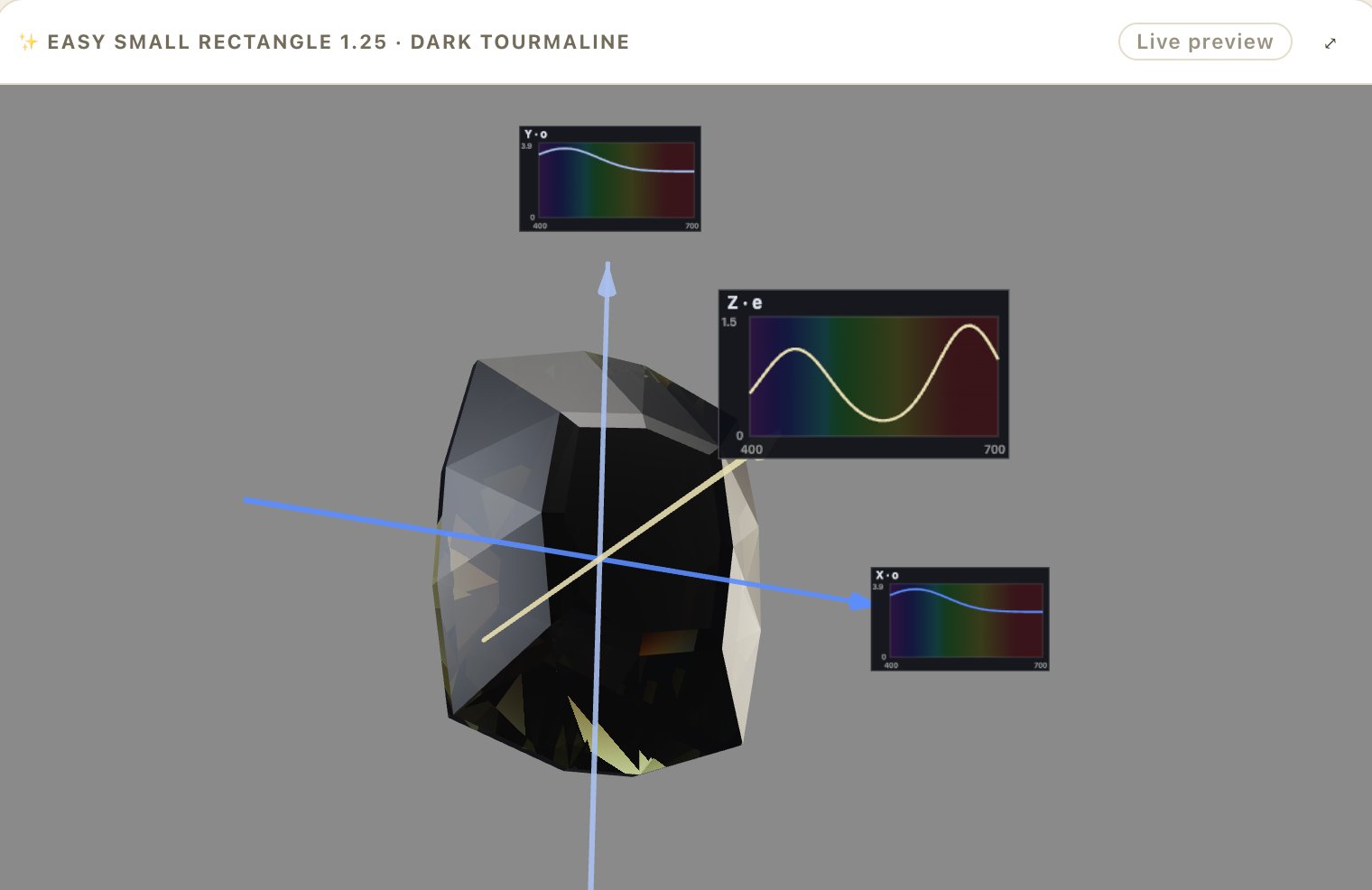
52 measured specimens sit behind those 40 materials, each one a laboratory scan of a particular stone, listed with its reference number and the locality it came out of. Pick the source and the render changes.
The curve, as measured
Every specimen plots its own absorption curve across the visible window, and opens out to show the ultraviolet and near-infrared the instrument also recorded.
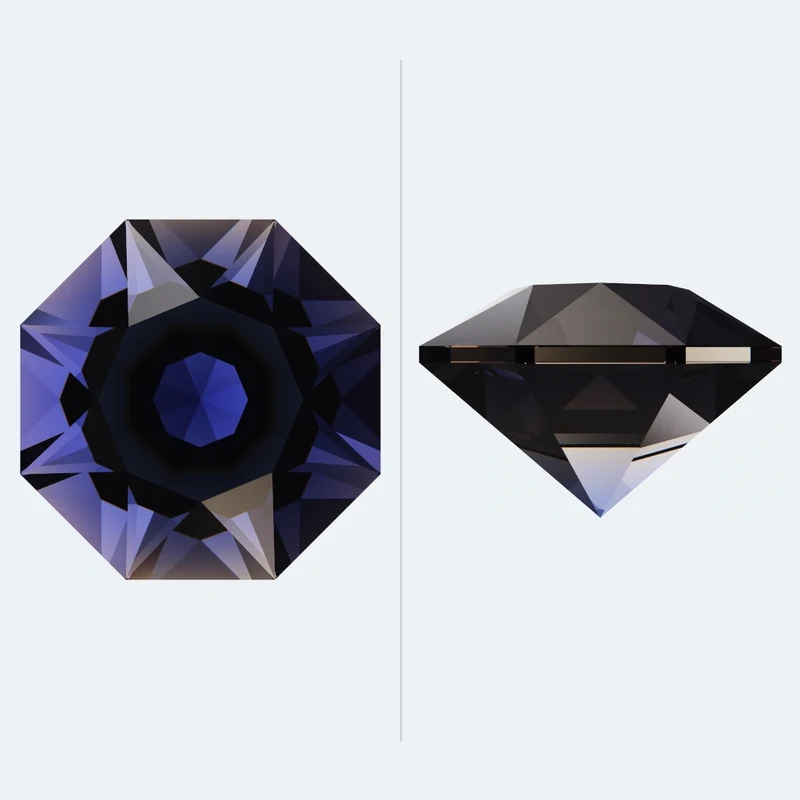
Pleochroism
Assign the α, β and γ curves to the stone's axes, then tilt it and watch the colour change the way the real crystal does.
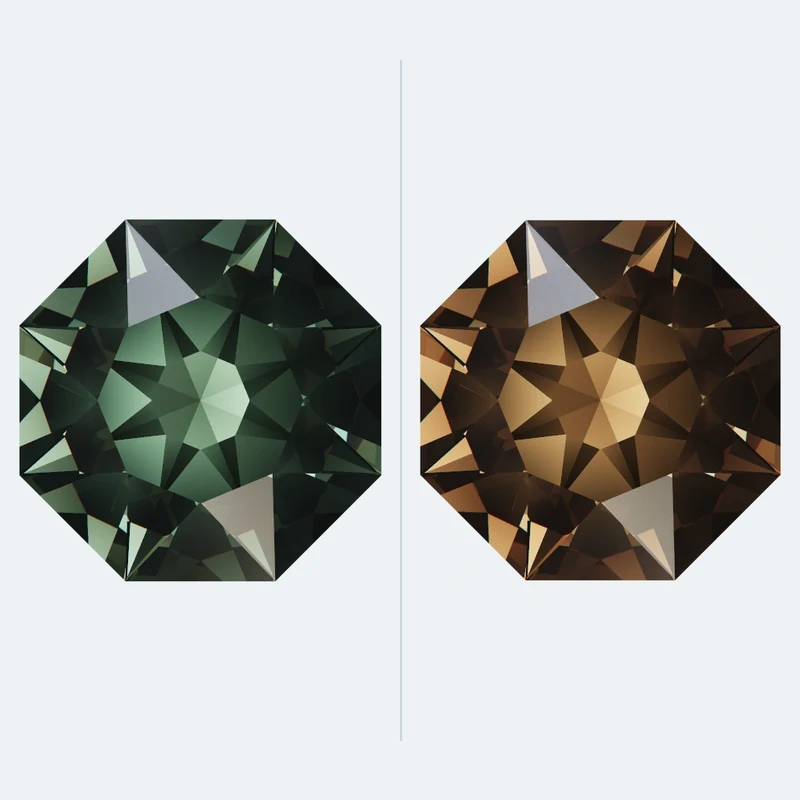
Colour change
Nanosital and colour-change materials answer to the light you put them under.
Under a blacklight
Turn the room over to ultraviolet and the fluorescent stones light up: uranium glass, and the eleven UV Nanosital colours, each with its own glow.
Colour zoning
A parti sapphire's two colours meet on a real boundary inside the stone, so the zone turns as the gem turns. Mélange Nanosital does the same thing with two measured spectra.
Materials
Corundum, beryl, quartz, garnet, tourmaline, zircon, glass and synthetics, each with its RI and dispersion on the label.
Measured spectra from the Caltech Mineral Spectroscopy Server, the archive of George R. Rossman · CC BY-NC 4.0
309 materials.
Every material in Pluto, rendered in Render Studio as a tilted rough cube.

Pleochroism
Colour change
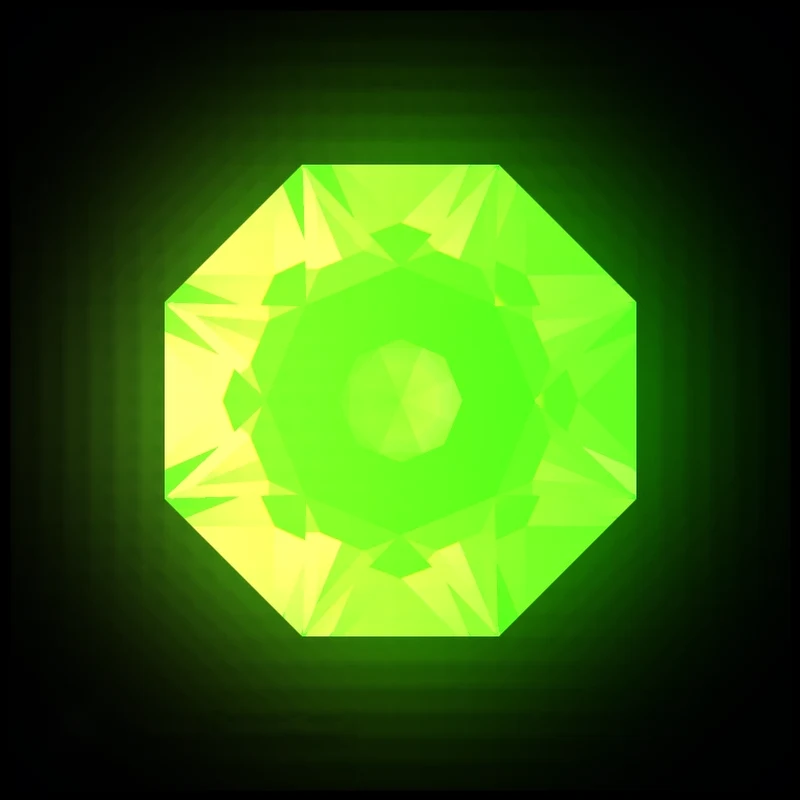
Under a blacklight
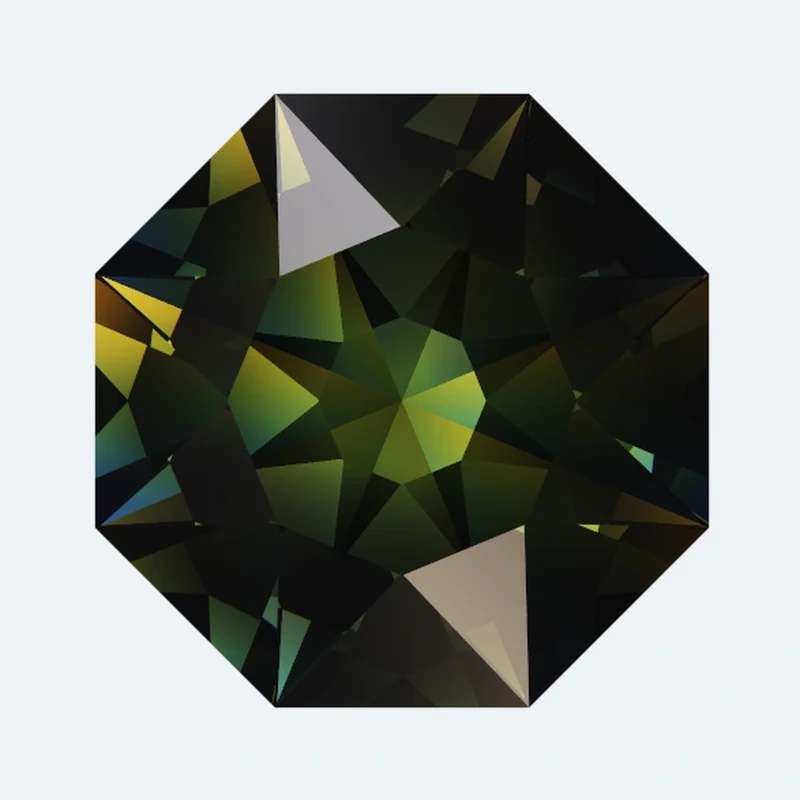
Colour zoning
In Roman myth Pluto ruled the underworld, and with it every precious thing buried beneath the earth: the metals and gemstones hidden in the dark.
Unearthed is bringing them up into the light: a studio for cutting and discovering gems.
Open the studio.
Open the studio and start cutting. Create a free account any time to keep your own designs.